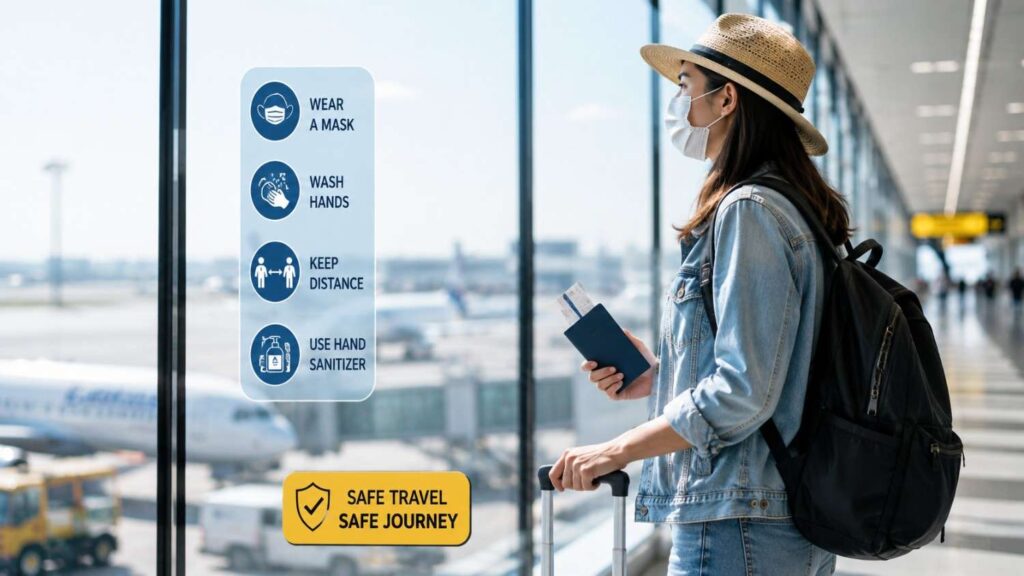
How to Travel Safely During the Pandemic
Travel during a pandemic or infectious-disease outbreak requires more thoughtful preparation than an ordinary holiday or business trip. Airports, aircraft, public transport, hotels, restaurants, conferences, tourist attractions, and border checkpoints may expose travelers to different health risks within a short period. At the same time, outbreak conditions and destination requirements can change. A useful travel plan therefore considers not only how to avoid infection but also what will happen if illness, delays, medical needs, or changing local guidance affect the journey.
Understanding how to travel safely during the pandemic also means avoiding outdated assumptions. Measures that were compulsory during one stage of an outbreak may later become optional, while a new disease event can create different precautions entirely. WHO recommends that travelers seek information about health risks before travel and understand how to minimize those risks before, during, and after the journey. CDC similarly recommends assessing the traveler’s health, itinerary, duration, purpose, activities, and infectious-disease conditions at the destination when preparing for international travel.
The strongest approach is layered rather than extreme. Review destination advice, evaluate your own health, update relevant vaccines, prepare medication, consider insurance, use respiratory protection when appropriate, pay attention to ventilation, and continue ordinary travel-health practices such as food, water, road, and environmental safety. These steps cannot guarantee that you will avoid every illness, but they can reduce preventable risks and make unexpected situations easier to manage.
| Travel Safety Area | Key Action | Important Consideration | Best-Practice Signal |
|---|---|---|---|
| Pre-Trip Planning | Check current health and travel guidance | Destination conditions can change before departure | Use current official sources |
| Personal Health | Review individual health risks and vaccination needs | Age, medical conditions, pregnancy, medications, and itinerary can affect risk | Consider professional travel-health advice |
| Air Travel | Reduce exposure in crowded transportation areas | Boarding, airports, connections, and deplaning can create exposure opportunities | Use layered precautions |
| Respiratory Protection | Consider a well-fitting mask when risk is elevated | N95 and KN95 respirators generally offer greater wearer protection than looser options | Prioritize fit and consistent use |
| Hand Hygiene | Wash hands or use appropriate sanitizer | Hygiene is especially useful before eating and after touching shared surfaces | Use sanitizer containing at least 60% alcohol when needed |
| Accommodation | Consider ventilation, crowding, and indoor exposure | Risk varies according to the pathogen and environment | Prefer practical risk-reduction measures |
| Travel Documents | Keep health, vaccination, insurance, and medication information accessible | Documents may be needed during care, delays, or entry procedures | Keep essential records available |
| Illness During Travel | Reduce close contact and seek appropriate medical advice | Symptoms and local health guidance determine the next step | Have a backup plan before departure |
| Travel Insurance | Review medical and disruption coverage | Epidemic-related exclusions and cancellation terms vary by policy | Read the policy before purchasing |
| Post-Travel Health | Monitor symptoms after returning home | Some travel-related illnesses may appear after the journey | Tell healthcare professionals about recent travel |
Why Does Travel Require More Planning During a Pandemic?
Travel brings together several exposures that do not normally occur in one place. A passenger may spend the morning in a crowded departure terminal, several hours inside an aircraft, another period waiting at immigration, and the evening using public transport, eating in a restaurant, and checking into a hotel. During an infectious-disease outbreak, every part of that journey may carry a different level and type of risk. For respiratory diseases, factors such as crowding, close contact, ventilation, duration of exposure, and individual susceptibility can all influence the situation.
Planning becomes even more important because travel health is broader than one particular pandemic disease. CDC’s pre-travel guidance recommends considering food- and waterborne infections, respiratory infections, injuries, vector-borne diseases, sexual health risks, and other destination-specific exposures. A traveler concentrating exclusively on COVID-19 or another outbreak could still overlook a vaccine requirement, malaria risk, foodborne illness, unsafe road conditions, or a medication problem that is more relevant to the actual itinerary.
Good planning therefore asks several questions at the same time: What disease activity exists at the destination? What is my personal risk? What vaccinations or medicines might I need? What kind of transport and accommodation will I use? Could healthcare be difficult to access? What will happen if I need to delay my return? Answering these questions before departure turns pandemic travel safety from a vague concern into a practical risk-management plan.
Your Personal Risk Matters
Travel risk is not identical for every person. A healthy traveler taking a short trip may face a very different situation from an older traveler, someone who is pregnant, a person with a chronic condition, or someone whose immune system is weakened. CDC’s Yellow Book specifically recommends assessing medical history, immunization history, medications, previous travel experience, itinerary, trip timing, reason for travel, planned activities, and the status of infectious diseases at the destination.
This individual assessment matters because the consequences of the same exposure can differ significantly between travelers. Someone at higher risk of severe respiratory illness may decide to use stronger precautions in a crowded airport or reconsider a non-essential trip during a major outbreak. A traveler who needs regular medication may be more concerned about maintaining supply during delays, while someone visiting a remote area may need to think carefully about access to medical care.
For complicated itineraries or medical histories, professional advice becomes particularly valuable. CDC notes that comprehensive travel-medicine consultation is especially important for travelers with complicated health histories, pregnant travelers, people taking unusual risks, and those undertaking prolonged or complex journeys. The goal is not to make travel frightening but to match precautions to the traveler’s actual circumstances.
Destination Conditions Can Change
A destination’s health situation can change between the day you book a flight and the day you travel. New outbreaks can emerge, disease activity can increase or decline, and national authorities may revise health recommendations. This is why a screenshot or blog post saved several months earlier should not be treated as the final source for current travel requirements.
WHO’s travel guidance encourages travelers to seek information about infectious-disease risks and vaccination requirements before traveling. CDC also provides destination-specific information and recommends checking current outbreak and safety information during pre-travel assessment. In addition, CDC Travelers’ Health maintains country-specific destination guidance that can help travelers identify relevant vaccines, diseases, and preventive measures.
A practical routine is to check official information at three points: when planning the trip, shortly before departure, and again if an outbreak changes while you are away. Airlines and travel companies can help explain their own operational policies, but public-health and government sources should remain the primary reference for medical guidance and official entry requirements. That simple habit helps prevent outdated information from shaping an important decision.
Related Articles
How Should You Prepare Before You Travel?
Preparation should begin well before you arrive at the airport. The most effective pre-trip plan combines health research, individual risk assessment, vaccination review, medication preparation, insurance, and contingency planning. WHO recommends seeking travel-health advice before departure and states that visiting a travel clinic preferably four to eight weeks before travel can be useful, although travelers may still benefit from advice even when departure is much closer.
The first task is to understand your destination rather than relying on general pandemic advice. Check infectious-disease conditions, vaccination recommendations, local healthcare access, and any current official entry requirements. CDC describes pre-travel consultation as an opportunity to assess destination hazards and identify ways to reduce them based on the traveler’s health background, itinerary, duration, purpose, and activities. This individualized approach is more useful than following a generic list that may not match your trip.
The second task is preparing for disruption. A positive test, fever, respiratory symptoms, flight cancellation, or local outbreak can turn a short trip into a longer one. Carry enough medication, understand your insurance, keep important documents accessible, and know how you would change accommodation or transport if needed. WHO specifically recommends sufficient prescribed medication to cover the trip plus possible delays or changes of plan and strongly advises comprehensive travel insurance.
Review Vaccinations and Health Advice
Vaccination should be reviewed as part of general travel preparation rather than only in response to one pandemic disease. WHO states that some vaccines are recommended because diseases may be endemic at the origin or destination and that certain countries may require proof of particular vaccinations for entry or exit. Its travel guidance lists routine vaccines as well as vaccines used selectively for travelers depending on destination-specific risks.
CDC’s Yellow Book likewise describes vaccination as a central component of pre-travel consultation. Recommendations can depend on destination, season, trip duration, purpose, activities, medical history, and time available before departure. CDC also notes that international travelers should remain up to date with current COVID-19 vaccination recommendations, while ordinary routine vaccines should be reviewed during the same process.
The practical lesson is to avoid creating your own vaccine schedule from search results. Check official destination guidance and discuss uncertainties with a healthcare professional who understands travel medicine. A person visiting family in a city may need different preparation from someone doing fieldwork in a rural area. Vaccination decisions are strongest when connected to the actual itinerary rather than treated as a universal checklist.
Prepare Insurance, Medication, and Documents
Travel insurance becomes more important when illness could require medical treatment, an extended stay, or a change of transport. WHO strongly advises travelers to obtain comprehensive travel insurance routinely and to disclose relevant underlying health conditions to the insurer. However, the word “comprehensive” should not be assumed to mean every possible pandemic-related expense is covered; the actual policy terms remain important.
Medication requires similar planning. WHO recommends carrying enough prescribed medicine for the expected trip as well as potential delays or changes. Travelers should also keep important health records accessible, including insurance certificates and relevant vaccination or prophylaxis documentation. WHO further notes that some medicines may be restricted or illegal in particular countries, so documentation from a doctor may sometimes be necessary.
Keep essential medicine and critical health documentation in a place you can access during the journey rather than assuming checked baggage will always arrive on schedule. Before departure, store insurer contact details, understand how to seek help abroad, and check whether the destination places restrictions on any medication you carry. These preparations may feel routine, but they become especially valuable when an outbreak makes travel less predictable.
Pandemic Travel Preparation Checklist
| Before Travel | Why It Matters |
|---|---|
| Check official destination health information | Disease activity and requirements can change |
| Review recommended and required vaccines | Needs vary by traveler and destination |
| Consider a travel-health consultation | Allows individualized risk assessment |
| Review travel insurance carefully | Coverage and exclusions vary |
| Pack enough prescription medication | Delays can extend a trip |
| Carry suitable masks or respirators | Useful during respiratory outbreaks |
| Keep health documents accessible | May be needed for care or official checks |
| Identify medical facilities | Saves time if illness develops |
| Make a backup accommodation plan | Isolation or delays can extend the stay |
| Recheck guidance shortly before departure | Older information may no longer apply |
How to Travel Safely During the Pandemic While in Transit
Transport is one of the most visible parts of pandemic travel, but risk should be considered across the entire journey rather than only while seated on an aircraft. Airports, railway stations, security queues, boarding areas, jet bridges, buses, taxis, and immigration halls can all involve close contact with other travelers. During respiratory outbreaks, precautions are most useful when they are applied consistently across these connected environments rather than switched on only after boarding.
WHO travel safety guidance also emphasizes planning ahead, maintaining protective measures during transit, keeping hands clean, and following local health and travel guidance.
Commercial aircraft have important ventilation and filtration systems. CDC notes that combining aircraft filtration with other mitigation measures, including masking where appropriate, can result in a low risk of SARS-CoV-2 transmission inside the aircraft cabin. However, CDC still recommends that travelers familiarize themselves with current respiratory-illness recommendations before flying and notes that people with suspected or confirmed acute respiratory infections should postpone travel until they are no longer considered contagious.
The practical strategy is therefore proportionate risk reduction. During periods of elevated respiratory-virus activity, you might choose stronger protection in crowded indoor terminals, keep a well-fitting respirator available, maintain hand hygiene, and reduce unnecessary close contact. If you are well and local disease activity is low, your choices may be different. The point is not to treat every journey as equally dangerous but to match precautions to current conditions and personal vulnerability.
Use a Well-Fitting Mask When Risk Is Elevated
Masks and respirators can be useful tools when the pandemic involves a respiratory virus. CDC’s current Yellow Book guidance states that wearing a well-fitting mask or respirator covering the nose and mouth reduces SARS-CoV-2 transmission. Masks can reduce the amount of infectious material released by an infected person, while respirators such as N95 or KN95 models can also protect the wearer by reducing inhalation of infectious particles.
For additional practical masking advice, travelers can also review guidance from a registered nurse with infectious-disease experience who discusses fit and consistent use during travel.
Protection varies according to fit and design. CDC states that NIOSH-approved respirators, including N95s, provide the highest level of protection among the options described in its COVID-19 travel guidance. Loose masks with gaps around the face provide less reliable protection. For a long journey, practical comfort also matters because a protective device provides little benefit if it is repeatedly removed or worn incorrectly.
When deciding whether to wear one, consider the environment rather than treating masking as an all-or-nothing identity choice. Crowded terminals, prolonged indoor waiting, high respiratory-virus activity, recent exposure, or traveling with someone at higher risk may justify stronger precautions. CDC specifically notes that masks can be particularly helpful in crowded indoor settings and during travel.
Do Not Ignore Airports, Boarding, and Connections
Many travelers think of disease exposure only in terms of the time spent in an aircraft seat. In reality, a journey may involve long security lines, lounges, boarding queues, crowded buses to remote gates, immigration halls, baggage-claim areas, and onward public transport. These environments can vary widely in ventilation and crowding, so the overall travel experience matters more than the flight alone.
CDC’s air-travel guidance explains that respiratory-disease precautions should be considered while planning the journey and as the departure date approaches. Aircraft filtration can reduce risk in the cabin, but people remain close together during boarding, movement, and other parts of the travel process. Travelers with respiratory symptoms are advised to consider testing, while those with confirmed or suspected acute respiratory infections should delay travel until they are no longer considered contagious.
Maintain simple hygiene habits throughout the trip. Wash or clean your hands at appropriate times, especially after using shared facilities and before eating, and avoid touching your face unnecessarily with unclean hands. Most importantly, do not allow a tight schedule to pressure you into traveling while clearly ill. Flexible tickets and realistic connection times can sometimes be as useful to health planning as the items in your travel kit.
How Can You Reduce Risk at Your Destination?
Arriving at your destination does not end pandemic-related health planning. In fact, most travelers spend far more time in accommodation, restaurants, workplaces, attractions, local transportation, and social gatherings than they spend on the aircraft. Exposure therefore depends heavily on what you do after arrival and the type of environment in which you spend your time.
For respiratory outbreaks, indoor crowding and poor ventilation deserve particular attention. Current CDC COVID-19 travel guidance identifies avoiding crowded, poorly ventilated indoor spaces as a prevention strategy. WHO’s updated COVID-19 fact sheet similarly recommends improving indoor ventilation and advises people at higher risk of severe illness to avoid crowded or poorly ventilated spaces where possible, or to use a properly fitted mask when those environments cannot be avoided.
However, pandemic safety should not make travelers forget other health hazards. WHO reminds travelers to consider road safety, food and water precautions, medication needs, and extreme weather. CDC’s pre-travel guidance likewise includes injuries, foodborne and waterborne infections, vector-borne diseases, respiratory infections, and other destination-specific risks. A complete travel-safety strategy therefore layers outbreak precautions onto ordinary travel-health practices instead of replacing them.
| Destination Factor | What to Review | Risk-Reduction Approach | Relevant Authority/Resource |
|---|---|---|---|
| Destination Health Status | Current outbreaks, respiratory-virus activity, and health notices | Recheck conditions shortly before departure | CDC Travel Health Notices; WHO Travel Advice |
| Entry Requirements | Current vaccination, documentation, screening, or other health rules | Verify requirements through official destination sources | Destination government and public-health authorities |
| Healthcare Access | Availability and quality of medical care | Identify suitable healthcare facilities before travel | Local health authorities and travel-health professionals |
| Indoor Environments | Crowding, ventilation, and time spent indoors | Favor well-ventilated or less crowded settings when appropriate | WHO and CDC respiratory-health guidance |
| Public Transportation | Crowding during buses, trains, terminals, and connections | Use layered precautions according to current risk | Local and national public-health guidance |
| Hotels and Accommodation | Ventilation, shared spaces, and access to healthcare | Consider practical exposure-reduction measures | Destination-specific guidance |
| Food and Water | Local food, water, and sanitation conditions | Follow standard travel-health precautions | CDC Yellow Book; WHO travel-health guidance |
| Local Activities | Events, tours, attractions, and crowded gatherings | Consider duration, crowd density, and ventilation | Current local health guidance |
| Personal Health Needs | Medications, underlying conditions, and individual vulnerability | Carry sufficient medication and relevant health information | Travel clinic or qualified healthcare professional |
| Changing Conditions | New outbreaks, updated restrictions, or health alerts | Recheck official information throughout the trip | WHO, CDC, and destination authorities |
Choose Activities With Ventilation and Space in Mind
When a pandemic involves a respiratory virus, the physical environment can affect exposure. CDC explains that SARS-CoV-2 can spread through airborne particles and respiratory droplets and that fine particles can accumulate indoors. It identifies crowded indoor spaces with poor ventilation as situations travelers can avoid when attempting to reduce COVID-19 exposure.
This does not mean every indoor activity is automatically unsafe or that every outdoor activity is automatically risk-free. Risk depends on multiple factors, including local disease activity, number of people, duration of contact, ventilation, personal vulnerability, and the behavior of people around you. A quiet museum during an off-peak period is different from a packed indoor event lasting several hours.
Use these factors when planning restaurants, conferences, tours, nightlife, meetings, and public transport. If respiratory-virus activity is high, consider less crowded times, better-ventilated venues, or outdoor alternatives where practical. WHO’s current COVID-19 information recommends improving natural airflow indoors and avoiding crowded or poorly ventilated areas for people at higher risk of severe disease.
Maintain Normal Travel-Health Precautions Too
One weakness of pandemic-era travel advice is that it can make one infection seem like the only danger that matters. In reality, travelers continue to face ordinary risks from contaminated food or water, road crashes, heat, mosquitoes and other vectors, medication problems, and destination-specific diseases. These hazards may be more important than the pandemic disease for some itineraries.
WHO advises travelers to continue chronic medicines, pay attention to road safety, follow food and water precautions, and protect themselves from extreme weather. CDC similarly recommends personalizing pre-travel advice around exposures such as injuries, foodborne and waterborne infections, respiratory infections, and vector-borne diseases.
Treat pandemic precautions as an additional layer rather than a replacement for good travel practice. Continue safe food choices, use appropriate insect precautions where required, manage heat exposure, wear seat belts, follow local safety rules, and keep taking prescribed medication. A traveler who avoids one respiratory infection but suffers a preventable road, food, or medication-related problem has not achieved meaningful overall travel safety.
What Should You Do If You Become Sick While Traveling?
Illness abroad is easier to manage when you have already decided what to do. Before departure, identify where you could obtain medical care, save your insurer’s emergency-assistance information, and consider how you would extend accommodation if you could not travel home on schedule. A plan made while healthy is usually clearer than one created while tired, feverish, or under pressure to catch a flight.
For respiratory illness, avoid assuming that you should continue traveling because the ticket is already paid for. CDC’s air-travel guidance states that people with confirmed or suspected acute respiratory infections should delay travel until they are no longer thought to be contagious. People with respiratory symptoms should also consider testing before departure and follow current recommendations from relevant health authorities.
The level of medical attention required depends on the illness, severity, personal health risks, and destination. General travel content cannot diagnose a condition or determine whether an individual is fit to fly. If symptoms are severe, worsening, or concerning, seek appropriate medical care. If your illness is mild, you may still need to change plans to reduce the chance of exposing others and to allow yourself time to recover.
Do Not Push Through Significant Symptoms
Travelers often feel pressure to continue with a trip because changing flights and accommodation is inconvenient or expensive. That pressure can encourage people to minimize symptoms. During a respiratory outbreak, however, traveling while contagious can expose other passengers and may also make the journey physically harder for the person who is ill.
CDC explicitly advises that people with confirmed or suspected acute respiratory infections should delay travel until they are no longer considered contagious. Its COVID-19 Yellow Book guidance also notes that people with a respiratory virus should stay away from others until symptoms are improving overall and fever has been absent for at least 24 hours without fever-reducing medication, followed by additional precautions for several days.
If illness develops, review current local and destination-specific health guidance rather than relying on rules remembered from earlier pandemic periods. Consider how to contact your airline, accommodation, insurer, or healthcare provider. If you must be around other people while recovering from a respiratory infection, current CDC and WHO guidance supports measures such as well-fitting masks, hygiene, and cleaner air to reduce spread.
Pay Attention After You Return Home
Travel-related illness does not always begin before the return flight. Some infections have incubation periods that mean symptoms appear days or weeks after a traveler comes home. That makes post-travel awareness an important part of how to travel safely during the pandemic, especially after visiting an area with known infectious-disease activity.
WHO advises travelers to seek medical attention after returning if they become ill in the following weeks, particularly for symptoms such as fever, persistent diarrhea, vomiting, jaundice, urinary problems, certain skin conditions, or if they may have been exposed to an infectious disease. WHO also recommends giving healthcare professionals relevant travel-history information.
Tell the clinician where you traveled, when you returned, what activities you undertook, and any known exposure that may be relevant. Mention vaccinations or preventive medication where appropriate. This information can help healthcare professionals consider travel-related causes that might otherwise be overlooked. Post-travel attention completes the safety cycle: prepare before departure, manage exposure during the trip, and respond appropriately if illness appears afterward.
Quick Answer About How to Travel Safely During the Pandemic
Learning how to travel safely during the pandemic starts with accepting that there is no single precaution that removes all travel risk. A safer trip combines several practical layers: checking current destination health information, reviewing your personal medical risks, making sure appropriate vaccinations are up to date, arranging sufficient medication, carrying necessary health documents, and understanding what your travel insurance actually covers. WHO advises travelers to seek information about health risks before departure and recommends travel-health consultation, adequate medication supplies, and comprehensive insurance as part of normal international travel preparation.
For respiratory outbreaks such as COVID-19, exposure can be reduced further through measures such as avoiding crowded, poorly ventilated indoor spaces when risk is elevated and using a well-fitting mask or respirator when appropriate. The CDC Yellow Book identifies vaccination, avoiding crowded poorly ventilated spaces, respiratory protection, respiratory etiquette, and hand hygiene among COVID-19 prevention measures for travelers. N95 or KN95 respirators generally offer greater respiratory protection than loose-fitting masks when properly worn.
Finally, plan for the possibility that something goes wrong. Know where you could obtain medical help, how you would extend accommodation, and what you would do if symptoms appear before a flight. CDC guidance states that people with confirmed or suspected acute respiratory infections should delay travel until they are no longer considered contagious. The safest strategy is therefore preparation plus flexibility rather than assuming your itinerary will always proceed exactly as planned.
Frequently Asked Questions About How to Travel Safely During the Pandemic
Questions about how to travel safely during the pandemic often have no single universal answer because both health conditions and government requirements vary by place and time. A measure that is appropriate during a major respiratory outbreak may be unnecessary for another type of infectious-disease event, while a traveler with underlying medical risks may reasonably take stronger precautions than a healthy traveler on the same route.
The safest way to use general online advice is as a planning framework rather than as a substitute for current destination guidance. WHO recommends seeking information about potential health risks before travel, while CDC’s travel resources emphasize individualized risk assessment based on health history, itinerary, duration, activities, and the infectious-disease situation at the destination.
The answers below therefore focus on durable principles: check current official information, understand personal risk, review vaccines, prepare medicine and insurance, reduce respiratory exposure where appropriate, and have a plan for illness. Any entry requirement, testing rule, vaccination certificate, or quarantine policy should always be checked against the latest official destination information rather than assumed from this general guide.
Is It Safe to Travel During a Pandemic?
There is no universal yes-or-no answer because “safe” depends on the disease involved, how actively it is spreading, the destination, your itinerary, your health, and what activities you plan to undertake. A short trip to a location with good medical access presents a different risk profile from a long journey to an area experiencing a major outbreak.
CDC recommends evaluating traveler characteristics alongside destination-specific risks. Factors include personal medical history, vaccination history, medications, itinerary, timing, travel purpose, planned activities, and the status of infectious diseases at the destination.
Before deciding, check official travel-health information and consider whether the trip can be postponed if your risk is unusually high. Travelers with complicated medical histories or special health circumstances may benefit from personalized professional advice. The right question is usually not “Is all travel safe?” but “Is this specific trip reasonable for this traveler under current conditions?”
Should I Wear a Mask on a Plane?
A mask can be a useful additional precaution when the pandemic involves a respiratory virus, particularly during periods of higher transmission, crowded travel, recent exposure, or when you or someone you are traveling with has a higher risk of severe illness. The level of benefit depends strongly on the type and fit of the mask.
CDC’s Yellow Book states that properly fitting masks and respirators reduce SARS-CoV-2 transmission. Respirators such as N95 and KN95 models provide respiratory protection to the wearer, while NIOSH-approved respirators such as N95s offer the highest level of protection among the mask options described in CDC’s guidance.
Your decision should also reflect current public-health advice. Even if a mask is not legally required, you may choose to wear one in a crowded terminal or cabin. Conversely, recommendations may become stronger during a significant outbreak. The practical focus should be fit, consistent use, current conditions, and personal vulnerability.
Are Airplanes Safe During a Respiratory Outbreak?
Commercial aircraft have ventilation and filtration systems that can reduce airborne contaminants. CDC reports that combining aircraft filtration systems with measures such as masking and cleaning can result in a low risk of SARS-CoV-2 transmission within the aircraft cabin. That is reassuring, but it does not mean infection is impossible.
Travel also involves more than time in the cabin. Passengers may spend hours in terminals, security queues, lounges, boarding areas, buses, jet bridges, immigration lines, and baggage halls. Exposure can therefore occur before or after the aircraft ventilation system becomes relevant.
If you are traveling during a respiratory outbreak, think about the entire journey. Follow current health recommendations, consider respiratory protection in crowded indoor spaces, and avoid traveling while you are likely to be contagious. CDC advises people with confirmed or suspected acute respiratory infections to postpone travel until they are no longer thought to be contagious.
Should I Get Vaccinated Before International Travel?
Vaccination needs should be reviewed before international travel because recommendations vary by destination, traveler, and disease. Some vaccines are part of routine immunization, while others may be recommended only for certain destinations or activities. In some cases, countries may require proof of a specific vaccination for entry or exit.
WHO’s travel-vaccine guidance states that vaccines can protect against diseases endemic to the country of origin or destination and notes that some countries require vaccination proof. CDC likewise considers vaccination a central part of pre-travel consultation and recommends basing decisions on destination, season, trip duration, purpose, and the traveler’s medical history.
Do not assume that pandemic vaccination is the only vaccine question that matters. Routine immunizations such as measles vaccination can also be relevant to international travel. CDC currently recommends that international travelers be fully vaccinated against measles before travel.
Do I Need Travel Insurance During a Pandemic?
Travel insurance is worth serious consideration because illness abroad can involve medical costs, additional accommodation, changes to transport, or other unexpected expenses. WHO strongly advises travelers to obtain comprehensive travel insurance routinely and to declare underlying health conditions to their insurer.
However, insurance policies vary significantly. A policy may cover some medical expenses without covering every cancellation, isolation, epidemic, or itinerary-change scenario. Read the policy wording and understand exclusions rather than relying only on a marketing summary that says “comprehensive.”
Check what happens if you become sick before departure, require treatment overseas, cannot take your booked return flight, or need to remain abroad longer than planned. Also note any requirements for notifying the insurer or using approved medical providers. Insurance cannot prevent illness, but suitable coverage can make an already difficult situation easier to manage.
What Should I Pack for Pandemic Travel?
Start with items you need regardless of the outbreak: prescribed medicines, relevant medical documentation, insurance information, and ordinary travel-health supplies. WHO recommends carrying enough prescription medication for the full trip plus possible delays or changes and keeping important health documents accessible while traveling.
For respiratory outbreaks, consider carrying well-fitting masks or respirators that you already know you can wear comfortably. CDC identifies N95 and KN95 respirators as protective options against inhaled infectious particles and notes that masking can be particularly helpful in crowded indoor settings and during travel.
A sensible travel kit might also contain basic hygiene supplies and any health items recommended for your particular destination. Avoid packing an enormous collection of products with no clear purpose. The most useful kit is one based on your itinerary, individual medical needs, expected exposures, and reliable travel-health guidance.
What Should I Do If I Get Sick Abroad?
If illness develops abroad, first consider how serious the symptoms are and whether medical assessment is needed. For significant, unusual, or worsening symptoms, obtain appropriate healthcare rather than relying only on online advice. Keep your insurer’s assistance information and details of nearby medical facilities available.
If you develop a respiratory illness, minimize unnecessary close contact with other people and follow current local health guidance. CDC advises that people with confirmed or suspected acute respiratory infections should postpone air travel until they are no longer considered contagious.
Your travel plans may need to change. Contact your accommodation, airline, insurer, or tour provider as appropriate and avoid assuming you must continue simply because reservations are non-refundable. If you are required to remain around others during recovery, measures such as a well-fitting mask, hygiene, and improved ventilation can help reduce respiratory-virus spread.
Conclusion
Understanding how to travel safely during the pandemic is less about following one rigid checklist and more about making informed decisions at every stage of the journey. Begin with destination-specific research and personal risk assessment. Check current health information, review relevant vaccinations, prepare medication, understand your insurance, and think about how your itinerary would change if you became ill or if local conditions changed. WHO and CDC both emphasize the value of advance health preparation for international travelers.
During the journey, use precautions that match the disease and current conditions. For respiratory outbreaks, that may include wearing a well-fitting mask or respirator in higher-risk indoor environments, avoiding crowded poorly ventilated spaces where possible, maintaining hand hygiene, and paying attention to symptoms. If you develop a confirmed or suspected contagious respiratory illness, CDC recommends delaying travel until you are no longer considered contagious.
Most importantly, remain flexible. Pandemic travel safety is not only about preventing infection; it is also about being prepared when plans change. Keep health documents accessible, carry sufficient medicine, know how to contact your insurer, and seek medical attention when symptoms warrant it. A well-prepared traveler cannot eliminate every risk, but they can greatly improve their ability to respond calmly and appropriately when unexpected problems occur.
Final Travel Safety Takeaway
The best pandemic travel plan is layered, realistic, and specific to your itinerary. Start with authoritative sources rather than social-media claims or outdated articles. WHO travel guidance and CDC Travelers’ Health resources can help identify destination-specific disease risks, vaccination considerations, and planning issues that may not appear in a generic travel checklist.
Then decide which precautions actually address the risks you face. A respiratory outbreak may make ventilation and respiratory protection especially important, while another disease may make vaccination, food and water precautions, or insect protection more relevant. General pandemic fear should never replace a clear assessment of the actual hazard.
Finally, recognize the limits of online guidance. If you have a complex medical condition, are immunocompromised, are pregnant, have recently been seriously ill, or are planning a high-risk itinerary, individualized advice from an appropriate healthcare professional can be more valuable than another generic checklist. CDC specifically highlights the importance of specialized pre-travel consultation for travelers with complicated circumstances.