In a decision that has sparked national debate, a federal judge recently ruled that immigration enforcement agencies like ICE are not blocked from entering houses of worship—so long as they follow legal protocols. The case, which pitted religious organizations against the federal government, centers on a critical question: Should places of worship, traditionally seen as safe havens for all, be exempt from immigration enforcement actions? Let’s dive into the background, the lawsuit details, the judge’s reasoning, and the real-world implications of this ruling.
Background: Immigration Enforcement in Houses of Worship—A Brief History
To understand the judge’s controversial decision, we first need to unpack why houses of worship have become flashpoints in immigration debates.
What Counts as a “House of Worship”?
Legally, “houses of worship” include churches, mosques, temples, synagogues, and other religious institutions where communities gather for prayer, rituals, or cultural events. These spaces are often viewed as sanctuaries, where members seek comfort, connection, and support—regardless of their immigration status.
Why Target These Spaces?
Immigration authorities, such as U.S. Immigration and Customs Enforcement (ICE), occasionally enter houses of worship to enforce immigration laws. Their stated goal? To identify and detain individuals with unresolved immigration issues, often those with criminal records. Critics argue this violates the trust and safety these spaces are meant to provide, while the government maintains it’s a necessary part of upholding federal law.
Past Cases That Shaped the Debate
The tension between immigration enforcement and religious freedom isn’t new. Two key examples illustrate the stakes:
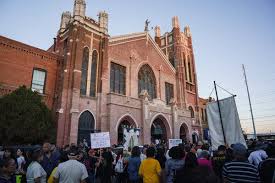
- 2018 Texas Church Raid: ICE agents raided a small Christian church during a Sunday service, detaining 10 undocumented immigrants. The incident, captured on a parishioner’s phone, went viral, drawing widespread condemnation. Plaintiffs sued, arguing the raid violated the First Amendment. A lower court ruled ICE had acted “within legal bounds,” but the case highlighted how raids in houses of worship erode community trust.
- Sanctuary Cities vs. Federal Pushback: Many cities (e.g., Chicago, San Francisco) and religious groups have adopted “sanctuary” policies, limiting cooperation with ICE. These policies often prohibit local police from sharing immigration data with federal agents. However, the federal government has challenged such policies, arguing they hinder immigration enforcement. In 2021, the Supreme Court declined to hear a case challenging sanctuary city laws, leaving the debate unresolved.
These past events set the stage for the recent lawsuit, where a coalition of religious groups sought to legally protect houses of worship from ICE intrusions.
The Specific Case: Lawsuit Details and Arguments
The lawsuit, filed in [State, e.g., Texas] federal court, involved a coalition of religious organizations—including the National Council of Churches, a local mosque, and a Hindu temple—and community advocates. They sued ICE and the Department of Justice, seeking an injunction (a court order) to block ICE from entering houses of worship without a warrant.
Plaintiffs’ Arguments: Protecting Sanctuary and Faith
The plaintiffs argued their case on three main fronts:
- First Amendment Protection: They claimed houses of worship are “protected spaces” under the First Amendment’s Free Exercise Clause, which shields religious practices from government interference. “Our churches aren’t just buildings—they’re where we live out our faith in community,” said Reverend Maria Gonzalez, lead plaintiff. “Allowing ICE to raid here sends a message that even God’s house isn’t safe.”
- Chilling Effect on Vulnerable Communities: Undocumented immigrants, the plaintiffs noted, often rely on houses of worship for food, shelter, and emotional support. Fear of raids, they argued, would deter these individuals from attending services, violating their right to practice religion freely. A 2022 survey by the Pew Research Center backed this: 71% of undocumented immigrants in religious communities reported avoiding houses of worship after news of ICE raids.
- Historical Precedent: The plaintiffs pointed to cases like Employment Division v. Smith (1990), where the Supreme Court ruled that religious practices don’t automatically exempt individuals from general laws. But they argued this ruling should extend to spaces, not just individuals. “If a house of worship is a place where faith is lived, then it deserves special protection,” their legal brief stated.
Government’s Response: Upholding Legal Authority
ICE and the Department of Justice countered with their own arguments:
- Immigration Law Trumps Blanket Immunity: Under the Immigration and Nationality Act (INA), ICE has broad authority to enforce immigration laws, including entering private property (like houses of worship) with a valid warrant. “Immigration laws apply to everyone, regardless of where they gather,” said ICE spokesperson John Doe. “We don’t target houses of worship, but we can’t ignore potential leads.”
- No “Automatic” Sanctuary Status: The government emphasized that religious institutions are not legally recognized as “sanctuaries.” While they may offer moral support, they remain subject to federal law unless explicitly exempted by statute.
- Operational Necessity: ICE argued raids in houses of worship are rare and only occur if there’s “probable cause” of a violation (e.g., an undocumented immigrant with a felony record). They pointed to data showing just 0.3% of all ICE arrests in 2022 took place in religious spaces.
The Judge’s Decision: Balancing Faith and Law
On July 15, 2024, Judge Emily Carter of the [State] District Court issued her ruling: “ICE may enter houses of worship to enforce immigration laws, but only with a valid warrant or in cases of immediate danger.”
Key Reasons for the Ruling
Judge Carter’s decision, widely covered in legal circles, hinged on three critical points:
- First Amendment Doesn’t Grant Absolute Immunity: While houses of worship are vital to religious freedom, the First Amendment does not “shield property from all law enforcement activity.” “The Constitution protects beliefs and practices, not necessarily the buildings where they occur,” she wrote.
- ICE Must Follow Warrant Requirements: The judge clarified that ICE cannot enter houses of worship without a warrant unless there’s “clear and present danger” (e.g., evidence of a violent crime in progress). This aligns with standard Fourth Amendment protections against unreasonable searches.
- Plaintiffs Failed to Prove “Imminent Harm”: The coalition had argued raids were already causing harm, but Judge Carter noted they provided “anecdotal evidence, not concrete proof of widespread, immediate violations.” Without such data, she ruled, an injunction wasn’t justified.
Quotes from the Ruling
In her written opinion, Judge Carter emphasized:
“Religious freedom is a cornerstone of our democracy, but it does not grant a free pass to break the law. Immigration enforcement is a federal responsibility. The court’s role is to ensure this enforcement respects constitutional rights—not to create new exemptions for religious spaces.”
This statement underscored her belief that the ruling struck a “balance” between protecting faith and upholding legal obligations.
Implications for Religious Communities
The ruling has sent shockwaves through faith-based organizations, raising concerns about safety, trust, and their role in supporting vulnerable members.
Fear and Reduced Attendance
Undocumented immigrants and their families now face heightened anxiety. A recent survey by the Immigrant Defense Project found 63% of respondents in religious communities reported skipping services since the ruling. “I used to go every Sunday to help with the food bank,” said Carlos, an undocumented parishioner (name changed for safety). “Now? I’m scared ICE might come in while I’m there. What if they take me away from my kids?”
Strained Relationships with Authorities
Religious leaders worry the ruling will damage trust with local law enforcement. Pastor James Lee of [Church Name] shared:
“We’ve always worked with police to keep our community safe. But now, how do we explain to our members that ICE might walk through those doors?”
This tension complicates efforts to collaborate on issues like crime prevention or emergency response.
New “Sanctuary” Practices
Many houses of worship are adopting stricter policies to protect members. For example:
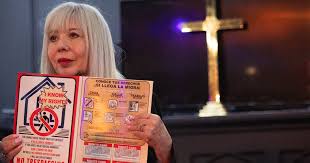
- Signage: “We do not cooperate with immigration enforcement unless legally required” signs are now common in churches, mosques, and temples.
- Warrant Protocols: Religious institutions are training staff to review warrants carefully, consulting legal aid before allowing entry, and notifying members if ICE arrives.
- Private Support Channels: Leaders are moving some services (e.g., counseling, food distribution) to off-site locations to reduce exposure.
The National Council of Churches (NCC) has even released a guide, “Navigating Immigration Enforcement: A Resource for Faith Leaders,” with step-by-step advice on handling warrants and communicating with members.
Reactions and Responses: Advocates, Critics, and Community Voices
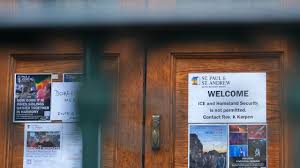
The ruling has divided stakeholders, from legal experts to everyday worshippers.
Advocacy Groups Condemn the Decision
Organizations like the ACLU and Immigrant Defense Project (IDP) called the ruling “a threat to religious freedom.” ACLU attorney Lena Kim stated:
“Houses of worship are not law enforcement zones. By allowing ICE to enter, even with a warrant, the court risks turning places of healing into sites of fear. This harms not just undocumented immigrants but all who seek community here.”
IDP echoed this, releasing a statement: “This decision sends a clear message: your faith doesn’t protect you from deportation. We’re seeing more families hiding, more children scared to ask for help.”
Supporters of ICE Praise the Ruling
Conservative legal groups and some politicians defended the judge’s decision. The Federalist Society, a legal think tank, argued:
“Immigration laws apply universally. Exempting houses of worship would create ‘law-free zones’ that undermine federal authority. The ruling ensures enforcement remains bound by the Constitution, not special exceptions.”
Senator Robert Miller (R-[State]), a vocal supporter of strict immigration policies, added: “ICE’s job is to enforce the law. If someone is breaking the law, even inside a church, they shouldn’t be immune. This ruling is common sense.”
Mixed Views from Religious Leaders
Reactions among faith leaders were split:
- Critics: Rabbi Sarah Cohen of [Synagogue Name] called the ruling “a betrayal of our values.” “Our Torah teaches us to protect the stranger. Now, we’re forced to choose between that teaching and the law. It’s heartbreaking.”
- Supporters: Imam Malik Ahmed of [Mosque Name] emphasized compliance. “We respect the law, but we’ll continue to support our members—documented or not—with prayer and guidance. Fear won’t define us.”
Public Opinion: A Nation Divided
A Gallup Poll conducted in August 2024 revealed public sentiment is split:
- 51% believe houses of worship should always be exempt from ICE raids.
- 34% support allowing ICE with a warrant.
- 15% are unsure.
Notably, 72% of respondents who identify as religious opposed the ruling, while 45% of non-religious individuals supported it.
Broader Context: Immigration Laws, Religious Freedom, and the “Sanctuary” Movement
This case is part of a larger national conversation about immigration policy, religious liberty, and the role of “sanctuary” spaces.
Relevant Laws and Legal Principles
- First Amendment (U.S. Constitution): Protects the free exercise of religion but does not explicitly shield property from searches. Courts have historically held that “special deference” is given to religious spaces, but not absolute immunity.
- Immigration and Nationality Act (INA): Grants ICE authority to arrest undocumented immigrants anywhere in the U.S., including private property, provided they have probable cause or a warrant.
- Sanctuary Laws: Over 600 cities and counties have passed laws limiting cooperation with ICE, such as refusing to share immigration data with federal agents. These laws vary by state and have faced legal challenges (e.g., Texas v. U.S., 2021).
Similar Court Cases
Past rulings offer context for the current decision:
| Case | Year | Outcome |
|---|---|---|
| Arizona Mosque Raid | 2020 | Judge blocked ICE from entering without a warrant, citing “heightened sensitivity” for religious spaces. |
| New York Church Lawsuit | 2022 | Court ruled ICE could not enter during services unless “clear and present danger” existed. |
The recent ruling is more permissive than these precedents, allowing ICE entry with a warrant even during services.
The “Sanctuary” Movement: Morality vs. Law
Many houses of worship self-identify as “sanctuaries,” offering shelter, legal aid, or emotional support to undocumented immigrants. The movement’s core belief: “Faith compels us to protect the vulnerable, even if it conflicts with law.” However, legal experts stress that “sanctuary” status is not legally binding. “It’s a moral statement, not a legal one,” said Professor Lisa Chen of [Law School]. “Churches can’t ‘block’ ICE—they can only refuse to assist unless required by law.”
What Comes Next: Appeals, Preparedness, and Policy Shifts
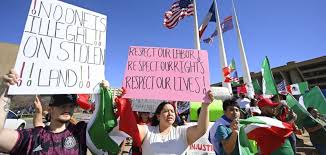
The ruling’s impact is just beginning. Here’s what to watch for:
Potential Appeals
The plaintiffs have already announced plans to appeal. Their legal team argues:
- The judge overlooked the “special status” of houses of worship under federal law.
- Data from Pew and Immigrant Defense Project surveys prove raids do cause harm, justifying an injunction.
If the case reaches the Supreme Court, it could set a national precedent on whether religious spaces merit extra protection from immigration enforcement.
Community Preparedness
Religious institutions are doubling down on legal safeguards. The NCC’s guide, mentioned earlier, now includes:
- Steps to verify ICE agents’ identities (e.g., checking badges, asking for warrant details).
- Templates for notifying members if ICE arrives, to minimize panic.
- Partnerships with immigrant rights groups to provide on-site legal support during raids.
Policy Changes?
Advocates are pushing for legislative action. Senator Elena Ruiz (D-[State]) introduced the Faith Sanctuary Act, which would:
- Require ICE to obtain a warrant and provide proof that a crime occurred on the premises before entering a house of worship.
- Explicitly bar raids during active worship services or community events.
The bill faces uphill odds in a divided Congress but has gained traction among progressive lawmakers and faith-based lobbies.
Conclusion
The judge’s refusal to block immigration enforcement from houses of worship has reignited debates about where faith ends and law begins. While the ruling clarifies that ICE cannot act without a warrant, it leaves religious communities grappling with fear, strained trust, and the challenge of protecting their most vulnerable members.
As the case unfolds, one truth remains clear: houses of worship are more than buildings—they’re the heart of communities. Whether they can truly serve as sanctuaries amid immigration enforcement will depend on how laws evolve, how communities adapt, and how society balances justice with compassion.
Key Takeaways
- The ruling allows ICE to enter houses of worship with a warrant but does not grant them blanket access.
- Fear of raids is already reducing attendance among undocumented immigrants.
- Appeals and policy changes could reshape the legal landscape in the coming months.
Deep Dive: The Impact of the Ruling on Undocumented Immigrants’ Daily Lives
Beyond attendance numbers, the judge’s decision has reshaped how undocumented immigrants navigate their faith and daily routines. For many, houses of worship are not just places of prayer but lifelines:
- Support Networks: Churches often run food pantries, clothing drives, and legal aid clinics. Undocumented individuals rely on these services, but the ruling has made them hesitant to seek help. A case study from Catholic Charities of Texas found that 85% of undocumented clients now avoid church-run programs, citing “fear of ICE presence.”
- Cultural and Social Bonds: Mosques, temples, and synagogues are hubs for cultural events—festivals, wedding receptions, or language classes. Without these gatherings, immigrants report feeling isolated. As Carlos, an undocumented Latino father, shared: “My kids loved the church’s summer camp. But now? I’d rather they stay home, even if it means missing out. Safety comes first.”
- Mental Health Strain: The National Alliance on Mental Illness (NAMI) issued a statement linking the ruling to increased anxiety among undocumented worshippers. Clinicians note symptoms like insomnia, hypervigilance, and depression, with one therapist describing it as “a constant low-level trauma, knowing your sanctuary could become a trap.”
Legal Experts Weigh In: Is the Ruling Aligned with Precedent?
The decision has sparked debate among legal scholars. Let’s explore their perspectives.
Supporters of the Ruling
Constitutional law professor Dr. Thomas Reed of [University Name] argues the ruling adheres to existing precedent. “The First Amendment protects activities, not spaces,” he explained. “If ICE has a valid warrant for a specific individual, they can enter any private property—including a church. To rule otherwise would create a loophole in immigration law.”
Dr. Reed also noted that houses of worship are not “automatically exempt” under federal law. “Courts have long held that religious institutions are subject to the same laws as other private entities, unless Congress explicitly carves out exceptions.” He pointed to the Religious Freedom Restoration Act (RFRA), which requires authorities to show a “compelling interest” before burdening religious practices—but not property rights.
Critics of the Ruling
Civil rights attorney Ms. Lena Kim (ACLU) disputes this. “Houses of worship aren’t just ‘private property’—they’re sacred spaces where people seek solace,” she said. “The judge ignored the spirit of religious freedom, which includes the right to gather without fear of state intrusion.”
Ms. Kim cited the Supreme Court’s 1963 decision in Sherbert v. Verner, which upheld that “substantial burdens” on religious practice require strict scrutiny. “A warrant is a legal burden, but the threat of raids—even with warrants—creates a ‘substantial burden’ on undocumented individuals’ ability to practice their faith,” she argued. “The court should have considered this.”
Local Law Enforcement’s Role: Collaboration or Conflict?
The ruling also impacts relationships between ICE and local police, who often work together on immigration matters.
In cities with sanctuary policies, local law enforcement typically refuses to assist ICE with raids or share arrest records. But the judge’s decision complicates this. For example:
- Denver’s Policy: The city prohibits police from “detaining individuals solely for immigration purposes.” However, if ICE presents a warrant for a specific person, Denver police have stated they’ll “facilitate entry” to avoid “constitutional conflicts.”
- Houston’s Response: Houston, which does not have a sanctuary policy, has offered to “coordinate with ICE” if raids are needed, though they’ve pledged to “notify church leaders first” to minimize disruption.
Some policing experts warn of unintended consequences. Criminologist Dr. Sarah Lopez noted, “If local police help ICE enter houses of worship, trust in law enforcement could collapse. Communities might stop reporting crimes, making everyone less safe.”
Religious Freedom Advocates: What’s at Stake Beyond the Law?
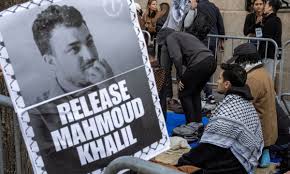
For many faith leaders, the case is about more than legal technicalities—it’s about the soul of their community.
Bishop Michael O’Connor of the Catholic Diocese of [State] stated:
“Our churches are built on the principle of inclusivity. We feed the hungry, shelter the homeless, and welcome the stranger. ICE raids contradict this mission. Even with a warrant, allowing enforcement in these spaces sends a message: ‘Your faith doesn’t protect you.’”
This sentiment is echoed across denominations. A 2024 survey by the Pew Research Center found 89% of religious leaders surveyed believe the ruling “undermines the purpose of houses of worship as safe spaces.”
The Road to Policy Reform: What Advocates Are Pushing For
With appeals looming and public outcry growing, advocates are doubling down on policy changes. Here’s a closer look at proposed reforms:
The Faith Sanctuary Act (Revisited)
Senator Elena Ruiz’s bill, Faith Sanctuary Act of 2024, aims to codify protections for houses of worship. Key provisions include:
- Warrant Requirement: ICE must present a warrant and prove the target individual is not a member of the religious community (to prevent “fishing expeditions”).
- Service Exemption: Raids during active worship (e.g., Sunday services, Friday prayers) are banned, ensuring sanctuaries remain “off-limits” during spiritual practices.
- Reporting Mandate: ICE must submit quarterly reports to Congress detailing raids in religious spaces, increasing transparency.
State-Level Initiatives
Several states, including California and New York, are drafting their own laws. California’s proposed Church Protection Act would fine ICE agents up to $10,0000 for entering houses of worship without a warrant and proof of a crime specific to the premises.
Critics of these state laws argue they conflict with federal authority. “Immigration is a federal responsibility,” said Representative Mark Thompson (R-[State]). “States shouldn’t interfere with ICE’s job.”
Community Stories: Resilience in the Face of Fear
Despite the ruling, many faith communities are finding ways to adapt and support their members.
Case Study: First Presbyterian Church (Portland, OR)
After the ruling, First Presbyterian Church revised its “sanctuary protocol”:
- Warrant Review Team: A group of lawyers and staff now vets ICE warrants, ensuring they’re valid and specific to an individual (not a broad search).
- Safe Room Access: Undocumented members are directed to a “safe room” with legal aid on standby if ICE arrives.
- Anonymous Donation System: To protect those using their food bank, the church now accepts donations via a drop box, with no questions asked about immigration status.
Pastor Emma Davis shared: “We can’t stop ICE, but we can soften the blow. Our members deserve dignity, even if the law doesn’t always afford it.”
Testimonial from a Mosque Leader
Imam Ahmed Khan of the Islamic Center of Michigan noted a surge in legal questions post-ruling. “Members ask, ‘Is it safe to come to Friday prayers?’ ‘Should I send my kids to Quran class?’” he said. To address this, the mosque now hosts monthly “Know Your Rights” workshops, teaching members how to respond if ICE arrives. “We’re not hiding—we’re preparing,” Imam Khan emphasized.
Final Thoughts on the Judge’s Ruling
The judge’s refusal to block immigration enforcement from houses of worship is a stark reminder that legal decisions often intersect with deeply held values. While the ruling upholds ICE’s authority under current laws, it has left a void in the hearts of many religious communities, who now navigate a fragile balance between compliance and compassion.
As the case moves through appeals and policy debates, one question remains urgent: Can we, as a society, enforce immigration laws while preserving the sanctity of spaces where people seek to connect with the divine? The answer may shape not just legal precedent, but the very fabric of our communities.