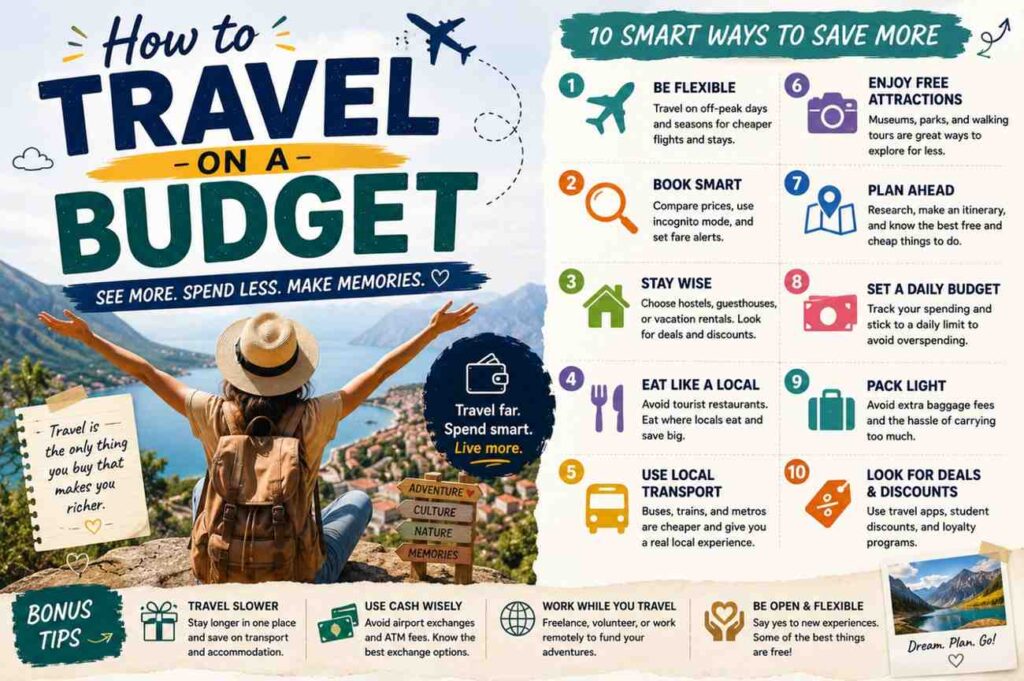
Smart Ways to Explore the World for Less
Traveling on a budget is all about making smart decisions that allow you to enjoy meaningful experiences without spending too much money. Instead of focusing on luxury, budget travel emphasizes value, flexibility, and planning. With the right approach, you can explore new destinations, meet new people, and enjoy different cultures while keeping your expenses under control.
One of the most important aspects of budget travel is planning ahead. Booking flights and accommodations early, comparing prices on different platforms, and being flexible with your travel dates can significantly reduce costs. Traveling during off-peak seasons also helps you avoid high prices and crowded tourist spots, making your experience more enjoyable and affordable.
Choosing the right type of accommodation is another key factor in saving money while traveling. Budget-friendly options such as hostels, guesthouses, and shared stays can provide comfortable lodging at much lower prices than luxury hotels. Staying slightly outside major tourist areas can also reduce costs while still keeping you well-connected to popular attractions through public transport.
Smart spending during your trip also plays a major role in budget travel. Using public transportation, eating at local restaurants or street food stalls, and focusing on free or low-cost activities can help you save a significant amount of money. By prioritizing experiences over expensive attractions, you can enjoy a richer and more authentic travel experience without exceeding your budget.
Understanding Budget Travel Basics
Budget travel is not simply about spending as little as possible—it is about maximizing value while maintaining comfort, safety, and meaningful experiences. When learning how to travel on a budget, it is important to understand that every travel decision, from transportation to accommodation, directly affects your total trip cost. A well-planned budget does not restrict you; instead, it gives you control and flexibility.
Most travel expenses fall into four main categories: flights, accommodation, food, and activities. Understanding this breakdown allows travelers to identify where savings can be made without compromising enjoyment. For example, choosing mid-range hotels instead of luxury resorts or using public transport instead of taxis can significantly reduce costs.
Budget travel also involves mindset. Instead of focusing on luxury, travelers prioritize experiences such as local culture, nature exploration, and authentic food. Many experienced travelers argue that budget travel often leads to more memorable experiences because it encourages deeper engagement with local life.
Another important aspect is planning flexibility. Budget travelers often adjust travel dates, destinations, and itineraries based on available deals. This adaptability is what makes how to travel on a budget practical and achievable for almost anyone, regardless of income level.
What is Budget Travel?
Budget travel refers to planning and experiencing trips in the most cost-efficient way possible without sacrificing essential comfort or safety. It is a travel style that prioritizes smart spending over luxury. Instead of staying in expensive hotels or booking premium flights, budget travelers use affordable alternatives such as hostels, shared accommodations, and discounted airfare options.
In practice, budget travel involves researching prices in advance, comparing travel platforms, and making strategic decisions about timing and destination. For example, traveling during off-peak seasons can reduce costs by up to 40–60% in many destinations. Similarly, choosing destinations with lower living costs allows travelers to extend their trips without increasing their budget.
Budget travel is also closely linked to flexibility. Travelers who can adjust their dates and destinations often find better deals. Tools like flight comparison websites and accommodation platforms help optimize spending. Ultimately, budget travel is not about limiting experiences—it is about maximizing what you get for every dollar spent.
Why Budgeting Matters in Travel
Budgeting plays a crucial role in ensuring a smooth and stress-free travel experience. Without a clear financial plan, even a short trip can become unexpectedly expensive. A structured budget helps travelers allocate money efficiently across essential categories such as transportation, lodging, meals, and entertainment.
One major benefit of budgeting is avoiding overspending. When travelers set daily or total spending limits, they are more conscious of their financial decisions. This reduces impulsive purchases and helps maintain financial control throughout the trip. Budgeting also prepares travelers for unexpected costs such as medical emergencies or last-minute transportation changes.
Additionally, budgeting allows for better decision-making. When you know how much you can spend, you naturally prioritize meaningful experiences over unnecessary luxury expenses. This approach enhances the overall travel experience and ensures that money is spent on what truly matters.
Common Myths About Budget Travel
Many people assume that budget travel is uncomfortable, unsafe, or low quality, but these beliefs are outdated. In reality, modern budget travel offers a wide range of affordable yet high-quality options. Hostels today often include private rooms, Wi-Fi, and modern amenities, while budget airlines offer reliable and safe services at lower prices.
Another common myth is that budget travelers miss out on experiences. On the contrary, they often experience more authentic cultural interactions because they engage with local transportation, street food, and community-based accommodations.
Some also believe that budget travel requires extreme sacrifice. However, the key principle is smart decision-making rather than deprivation. By planning carefully and using digital tools, travelers can enjoy comfort and adventure simultaneously.
Planning Your Trip for Maximum Savings
Proper planning is the foundation of successful how to travel on a budget strategies. Without planning, travel expenses can increase quickly due to last-minute bookings and limited availability. A well-planned trip allows travelers to take advantage of discounts, seasonal deals, and flexible options that significantly reduce overall costs.
Planning begins with choosing the right destination. Some countries naturally offer lower living costs, making them ideal for budget travelers. Researching currency value, transportation costs, and accommodation rates helps identify the most affordable options.
Another important factor is timing. Traveling during off-peak seasons often results in cheaper flights and hotels. Early planning also allows access to early-bird deals, which can significantly reduce expenses. A structured itinerary helps avoid unnecessary spending while ensuring a smooth travel experience.
| Travel Category | Low Budget Option | Mid Budget Option | Money-Saving Strategy |
|---|---|---|---|
| Flights | Budget airlines, fare alerts | Standard airlines with deals | Book early, use price comparison tools |
| Accommodation | Hostels, couchsurfing | Budget hotels, Airbnb rooms | Stay outside city center |
| Food | Street food, local markets | Small restaurants | Avoid tourist areas |
| Transport | Public buses, walking | Ride-sharing apps | Use travel passes |
| Activities | Free attractions, parks | Paid tours (discounted) | Look for combo tickets |
Choosing Affordable Destinations
Selecting the right destination is one of the most effective ways to reduce travel costs. Countries in Southeast Asia, Eastern Europe, and parts of South America are known for being budget-friendly due to lower living expenses and favorable currency exchange rates.
Affordable destinations offer cheaper accommodation, food, and transportation, allowing travelers to extend their trips without increasing their budget. For example, street food meals in some countries may cost less than a dollar, while public transport is widely accessible and inexpensive.
It is also important to consider seasonal pricing differences. Even expensive destinations can become affordable during off-peak months. Researching tourism trends and local seasons can help travelers identify the best times to visit.
Best Time to Book Flights
Flight prices vary significantly depending on booking time, demand, and season. In general, booking domestic flights 1–3 months in advance and international flights 2–6 months in advance results in better prices.
Mid-week flights, especially Tuesdays and Wednesdays, are often cheaper than weekend departures. Early morning or late-night flights may also offer lower fares. Avoiding peak travel seasons such as holidays and summer vacations can further reduce costs.
Using fare tracking tools helps monitor price fluctuations and identify the best booking time. Flexibility is key when learning how to travel on a budget, as even small date adjustments can lead to significant savings.
Setting a Realistic Travel Budget
A realistic travel budget provides structure and prevents financial stress during trips. The first step is estimating total trip costs, including transportation, accommodation, food, activities, and emergency funds.
Breaking the budget into daily spending limits helps maintain control. For example, assigning fixed amounts for meals and transport ensures balanced spending throughout the trip.
It is also important to include a buffer for unexpected expenses. Currency fluctuations, emergencies, or spontaneous activities can increase costs. A well-planned budget ensures that travelers enjoy their trip without financial worry.
Finding Cheap Flights and Transport Options
Transportation is often the most expensive part of travel, which is why it plays a major role in learning how to travel on a budget effectively. With rising airfare and fuel costs, travelers need to rely on smart planning and digital tools to find affordable options. By combining flexibility with research, it becomes possible to significantly reduce travel expenses without compromising convenience.
Today’s travel platforms and booking tools make it easier than ever to compare prices across airlines, routes, and dates. At the same time, alternative transport options like buses, trains, and shared rides offer cost-effective ways to reach destinations. Understanding how pricing works and when to book can make a huge difference in overall travel costs.
Using Flight Comparison Tools
Flight comparison tools such as Skyscanner, Google Flights, and other booking platforms help travelers quickly compare fares across multiple airlines. These tools display different price options, allowing users to choose the most affordable and convenient routes in seconds.
Many of these platforms also offer advanced features like flexible date searches, “cheapest month” views, and fare tracking alerts. These features help travelers identify price trends and book flights at the most cost-effective time, often saving a significant amount of money.
Alternative Transport Options
In many cases, flights are not the cheapest option, especially for short or regional travel. Buses and trains often provide much lower fares while still offering comfort and reliability. In addition, they allow travelers to enjoy scenic routes and a more relaxed travel experience compared to air travel.
Overnight buses and long-distance trains can also help save money on accommodation, as they combine travel and sleeping into a single cost. Ride-sharing and carpooling services are additional budget-friendly alternatives that offer flexibility and reduced transportation expenses.
Hacks for Lower Airfare
Lowering airfare costs requires a mix of timing, flexibility, and smart searching techniques. One common strategy is using incognito mode when searching for flights to avoid price changes based on browsing history. While not always guaranteed, it can help prevent dynamic pricing increases.
Setting fare alerts is another effective method, as it allows travelers to monitor price drops and book at the right moment. Additionally, choosing mid-week flights, avoiding peak holiday seasons, and considering nearby airports can all lead to significant savings. Flexibility remains the most powerful tool when trying to reduce flight costs.
Affordable Accommodation Strategies
Accommodation is one of the biggest expenses in travel, and choosing the right option can significantly reduce your overall budget. Smart travelers focus on balancing cost, comfort, and safety while selecting places to stay. By exploring different types of lodging, it is possible to save money and still enjoy a comfortable travel experience.
Modern travel platforms have made it easier to find affordable stays across the world. From shared hostels to private rentals, travelers now have more flexibility than ever before. The key is to choose accommodation that matches your travel style, trip duration, and budget level.
Hostels, Guesthouses, and Budget Hotels
Hostels are one of the most budget-friendly options, especially for solo travelers and backpackers. They offer shared rooms, lower prices, and a social environment where travelers can meet people from different countries. This makes them ideal for those who prioritize affordability and interaction over privacy.
Guesthouses provide a more private and quieter experience while still remaining affordable. They are often family-run, offering a more personal touch compared to larger hotels. Budget hotels, on the other hand, provide basic amenities such as private bathrooms and Wi-Fi at reasonable prices, making them a balanced option for comfort and cost.
Airbnb and Homestays
Airbnb and homestays have become popular alternatives to traditional hotels due to their flexibility and affordability. Travelers can choose between shared rooms, private rooms, or entire apartments depending on their budget and needs. This option is especially cost-effective for longer stays, as it often reduces the per-night expense significantly.
Homestays also offer a deeper cultural experience by allowing travelers to live with local families. This provides insight into daily life, traditions, and local customs, making the trip more meaningful and immersive. It is a great choice for those who want both savings and cultural connection.
Couchsurfing and Alternatives
Couchsurfing is a unique travel option that allows travelers to stay for free with local hosts. It is especially popular among budget travelers and backpackers who prioritize cultural exchange and social interaction over luxury accommodations. This option helps reduce costs to almost zero for lodging.
However, safety and communication are very important when using platforms like Couchsurfing. Travelers should always check host reviews, verify profiles, and maintain clear communication before confirming a stay. When used responsibly, it can be a rewarding and cost-effective way to travel and connect with locals.
Saving Money on Food and Daily Expenses
Food is one of the most consistent daily expenses while traveling, but it can be easily managed with smart choices and local awareness. Instead of relying on expensive restaurants or convenience stores, travelers can significantly reduce costs by planning meals and choosing affordable eating habits. Small changes in food habits can make a big difference in the overall travel budget.
Daily expenses such as snacks, drinks, and small purchases also add up quickly during a trip. Being mindful of where and how you spend money helps you stay within budget while still enjoying local cuisine and experiences. The key is to prioritize value and authenticity over convenience and tourist-focused options.
Eat Like a Local
Eating like a local is one of the most effective ways to save money while traveling. Local food markets, street vendors, and small family-run eateries often offer delicious meals at a fraction of the cost of tourist restaurants. These places also provide a more authentic taste of regional culture and cuisine.
In many destinations, local meals are not only cheaper but also fresher and more traditional. By observing where locals eat and avoiding heavily advertised restaurants, travelers can enjoy high-quality food without overspending.
Cooking While Traveling
Cooking your own meals is another powerful way to reduce food expenses, especially for long-term travelers. Many hostels, Airbnb rentals, and guesthouses provide access to shared or private kitchens, allowing travelers to prepare simple meals.
Even basic cooking, such as breakfast or packed lunches, can lead to significant savings over time. It also gives travelers more control over ingredients, portion sizes, and dietary preferences, making it both a budget-friendly and healthier option.
Avoid Tourist Traps
Tourist areas are often filled with restaurants and cafes that charge significantly higher prices due to location rather than quality. These “tourist traps” can quickly drain your budget without offering better food or service.
Walking just a few streets away from major attractions often reveals more affordable and authentic dining options. Researching local recommendations or asking residents can help you find hidden gems that offer better value for money.
Smart Packing and Travel Gear for Budget Trips
Smart packing is an essential part of budget travel because it helps reduce unnecessary expenses such as baggage fees and last-minute purchases. Packing efficiently also makes travel more convenient, especially when moving between destinations frequently.
Choosing the right travel gear ensures that you are prepared without carrying unnecessary weight or items. A well-planned packing strategy can improve mobility, comfort, and overall travel efficiency.
Packing Light Saves Money
Packing light is one of the simplest ways to save money while traveling. Many airlines charge extra fees for checked baggage, so carrying only a cabin-sized bag can help avoid these additional costs. It also makes transportation easier and faster.
Light packing also improves flexibility, especially when using public transport or moving between multiple locations. Travelers can move more freely without worrying about heavy luggage or storage issues.
Essential Budget Travel Gear
Having the right travel gear can make a budget trip more comfortable and efficient. Essential items include a reusable water bottle, universal adapter, lightweight backpack, and portable charger. These items help reduce unnecessary spending during the trip.
A reusable water bottle, for example, helps avoid repeatedly buying bottled water, while a portable charger ensures devices stay powered during long travel days. These small investments can save money in the long run.
Avoiding Extra Baggage Fees
Understanding airline baggage policies is crucial for avoiding unexpected costs. Each airline has different rules regarding weight limits, cabin baggage size, and additional charges for extra luggage.
By checking these policies in advance and packing accordingly, travelers can avoid expensive last-minute fees. Weighing luggage before heading to the airport also helps ensure compliance and prevents unnecessary stress during check-in.
Money-Saving Travel Apps and Tools
Travel apps and digital tools have made budget travel much easier by helping travelers compare prices, track deals, and manage bookings in one place. Instead of manually searching multiple websites, these tools allow users to quickly find the most affordable options for flights, accommodation, and transport. This saves both time and money while improving overall travel planning efficiency.
Modern travel apps also provide real-time updates, price alerts, and personalized recommendations based on user preferences. By using these tools strategically, travelers can identify discounts, avoid overpriced bookings, and make smarter financial decisions throughout their journey.
| Travel Stage | Recommended Tool/Method | Purpose | Benefit |
|---|---|---|---|
| Flight Booking | Skyscanner, Google Flights | Compare flight prices | Find cheapest fares instantly |
| Accommodation Booking | Booking.com, Hostelworld | Find stays | Budget-friendly lodging options |
| Trip Planning | Travel itinerary apps | Organize schedule | Avoid unnecessary expenses |
| Budget Tracking | Expense tracking apps | Monitor spending | Stay within budget limits |
| Price Monitoring | Fare alerts & notifications | Track price drops | Book at lowest possible price |
Best Apps for Budget Travelers
Apps like Skyscanner, Booking.com, and Hostelworld are widely used by budget travelers to find affordable flights, hotels, and hostel stays. These platforms compare thousands of options instantly, helping users choose the best deals based on price, location, and reviews.
Each app offers unique features that support budget planning. For example, Skyscanner helps compare flight prices across airlines, Booking.com provides flexible accommodation filters, and Hostelworld focuses on low-cost hostel options, making it easier to plan an entire trip within budget.
Price Alerts and Deal Tracking
Price alert features are essential tools for saving money on travel bookings. These alerts notify users when flight or hotel prices drop, allowing them to book at the lowest possible rate. This helps travelers avoid overpaying and take advantage of limited-time deals.
Deal tracking tools also analyze price trends over time, helping users understand the best time to book. By setting alerts in advance, travelers can wait for optimal pricing instead of making rushed or expensive decisions.
Offline Travel Tools
Offline travel tools are especially useful for avoiding roaming charges and staying connected without internet access. Offline maps and navigation apps allow travelers to explore new destinations without relying on mobile data.
These tools also help during emergencies or when traveling in remote areas with limited connectivity. By downloading maps, translations, and travel guides in advance, travelers can save money while ensuring a smoother and more reliable travel experience.
Mistakes to Avoid When Traveling on a Budget
Traveling on a budget requires careful planning, flexibility, and awareness of common financial pitfalls. Many travelers unintentionally overspend not because of large expenses, but due to small mistakes that add up over time. Understanding these mistakes can help you manage your money more effectively and make your trip smoother and more affordable.
Avoiding budgeting errors is just as important as finding discounts. Even the best travel deals can become expensive if hidden costs, poor planning, or lack of tracking are ignored. A smart budget traveler focuses not only on saving money but also on managing it wisely throughout the journey.
Overplanning Expenses
Overplanning your travel budget can sometimes create more problems than solutions. When every detail is rigidly fixed, it reduces your flexibility to take advantage of cheaper alternatives or spontaneous deals. Strict planning may also force you into expensive bookings simply because you are locked into a schedule.
A more flexible approach allows you to adjust plans based on real-time prices and opportunities. This balance between planning and adaptability helps you save money while still enjoying a stress-free travel experience.
Ignoring Hidden Costs
One of the most common mistakes in budget travel is ignoring hidden costs that are not always visible during initial booking. These can include taxes, service charges, baggage fees, local transportation, and attraction entry fees. Over time, these small expenses can significantly increase your total travel cost.
Being aware of these hidden charges helps you create a more realistic budget. Carefully reading booking terms and researching destination costs in advance ensures that you are not surprised by unexpected expenses during your trip.
Not Tracking Spending
Failing to track daily expenses is another major mistake that can quickly lead to overspending. When travelers do not monitor their spending, it becomes easy to lose control of small purchases such as food, transport, and souvenirs.
Using simple budgeting apps or even manual tracking methods can help you stay aware of your financial situation throughout the trip. Regular monitoring ensures that you stay within your budget and make adjustments when needed, preventing financial stress while traveling.
Frequently Asked Questions
A Frequently Asked Questions (FAQ) section is a part of an article or website that provides quick answers to the most common questions related to a topic. It is designed to make information easier to understand and save readers time by giving direct explanations without requiring them to read the full content.
FAQs are usually written in a simple question-and-answer format, which makes them easy to scan and helpful for users who want fast clarity on specific points.
How can I travel cheaply for a week?
To travel cheaply for a week, focus on choosing budget-friendly destinations where the cost of living is low. Staying in hostels, guesthouses, or budget hotels can significantly reduce accommodation expenses, while using public transport instead of taxis helps save even more money.
Planning meals wisely also plays an important role—eating at local markets or street food stalls is much cheaper than dining in tourist restaurants. With smart planning and simple lifestyle choices, it is possible to enjoy a full week of travel without overspending.
What is the cheapest way to travel long distance?
The cheapest way to travel long distances often depends on timing and flexibility. Booking flights early or during off-peak seasons can help reduce airfare significantly. Comparing prices across different airlines also ensures you get the best deal.
In many regions, buses and trains are even more affordable than flights and can be a great alternative for long-distance travel. They may take longer, but they often provide cost savings and additional travel experiences along the way.
How do I plan a budget trip?
Planning a budget trip starts with setting a clear spending limit and identifying how much you can allocate for flights, accommodation, food, and activities. Choosing affordable destinations and traveling during low seasons can immediately reduce overall costs.
Using travel comparison tools for flights and hotels helps you find the best deals available. A well-structured plan combined with flexibility ensures that you stay within budget while still enjoying your trip fully.
Which countries are cheapest to visit?
Some of the cheapest countries to visit are usually located in regions like Southeast Asia, Eastern Europe, and parts of South America. These destinations offer affordable accommodation, low-cost transportation, and inexpensive local food.
Countries such as Vietnam, Thailand, India, and Indonesia are popular among budget travelers due to their rich culture and low daily expenses. Similarly, Eastern European countries provide historical attractions at a fraction of the cost of Western Europe.
How do travelers save money on flights?
Travelers save money on flights by booking tickets early and remaining flexible with their travel dates. Mid-week flights and off-season travel often come with significantly lower prices compared to peak periods.
Using price alerts and flight comparison tools helps track fare changes and identify the best time to book. Additionally, considering nearby airports and alternative routes can further reduce flight costs.
Conclusion
Learning how to travel on a budget is ultimately about making smart, informed, and flexible decisions that help you maximize experiences while minimizing costs. When you plan carefully, compare prices, and stay open to affordable alternatives, you can significantly reduce travel expenses without sacrificing comfort or enjoyment.
With the right strategies—such as choosing budget accommodations, using public transport, booking wisely, and managing daily expenses—travel becomes more accessible to everyone. Budget travel is not about limiting your journey, but about exploring the world in a more efficient and meaningful way.